
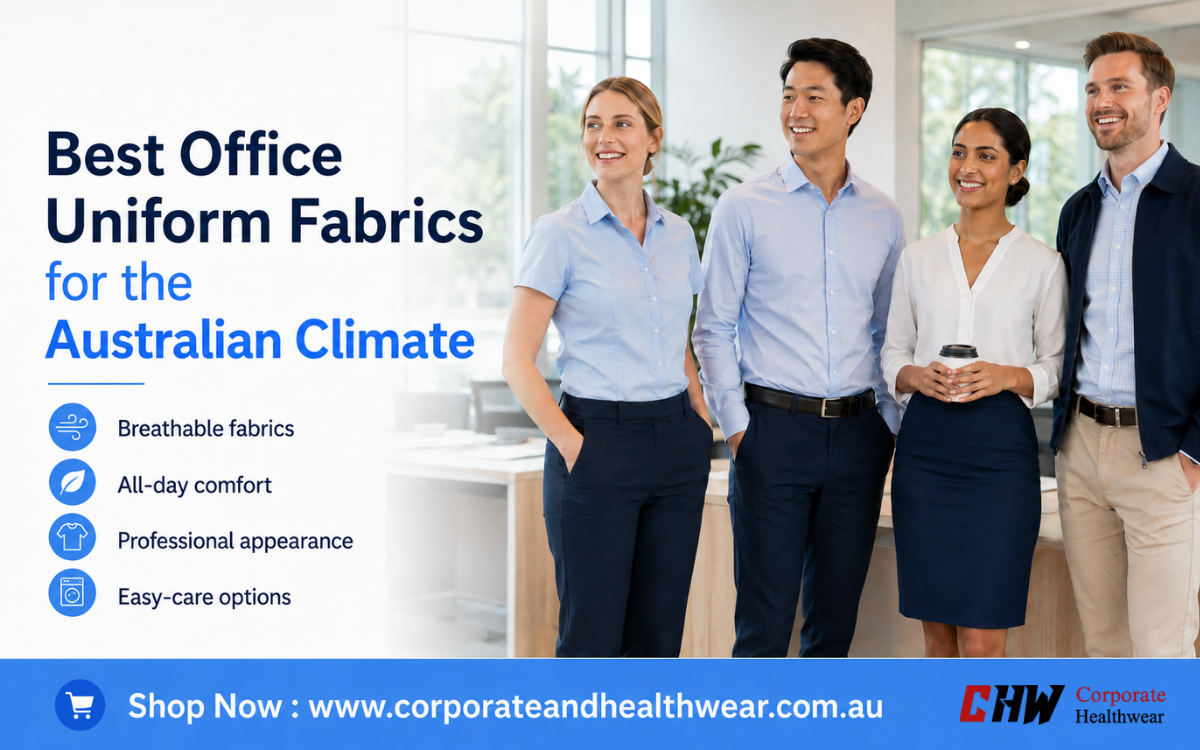
Choosing the right office uniform is about more than creating a professional appearance. In Australia, workplace clothing may need to perform across warm summers, cool mornings, air-conditioned offices and changing indoor-outdoor conditions. The best fabrics should feel comfortable, maintain their shape and remain presentable throughout a long working day.
When selecting corporate and office wear, fabric choice should be one of the first considerations. Breathability, durability, wrinkle resistance and ease of care all affect how practical a uniform feels. A well-chosen fabric can help employees look polished while staying comfortable through meetings, customer interactions and everyday office tasks.
Why Fabric Choice Matters for Australian Office Uniforms
Australia does not have one single workplace climate. Conditions vary between regions, seasons and individual workplaces. An employee may travel to work in warm weather, spend the day in a cool office and then head outside again.
A practical office fabric should ideally offer:
- Breathability for warmer conditions
- Enough structure for a professional appearance
- Comfortable movement
- Easy-care performance
- Reasonable wrinkle resistance
- Durability for repeated use
- Flexibility for seasonal layering
The right option also depends on the role. Reception staff, sales teams, managers and employees moving between indoor and outdoor areas may have different needs.
Cotton: Breathable and Comfortable
Cotton is a popular choice for shirts, polos, tops and other everyday garments. Its natural feel is comfortable against the skin, while its breathability can be useful during warmer Australian weather.

When Cotton Works Well
Cotton suits workplaces where comfort and a clean, approachable appearance are priorities. Key advantages include:
- Soft feel
- Good breathability
- Comfortable everyday wear
- Versatility across casual and professional settings
Pure cotton may crease more easily than some blended fabrics. For employees who need to maintain a crisp appearance all day, a cotton blend may offer a more practical balance.
Polyester Blends: Practical for Busy Teams
Polyester is often blended with cotton or other fibres to improve durability, shape retention and ease of care. For businesses managing uniforms across larger teams, these qualities can be useful.
Polyester blends may require less ironing than some natural fabrics and can hold their appearance well through repeated washing. This makes them suitable for customer-facing teams that need reliable uniforms throughout the working week.
The key is to consider the entire blend, fabric weight and garment construction rather than judging a uniform by fibre name alone.
Cotton-Polyester Blends: A Balanced Choice
For many Australian businesses, a cotton-polyester blend provides a useful middle ground. Cotton contributes softness and breathability, while polyester can improve durability and wrinkle resistance.
This type of fabric works well for shirts, blouses, polos and garments that are washed frequently. When comparing corporate wear, check the fabric composition as well as the style. Two similar-looking shirts may perform differently depending on their blend, weight and construction.
Stretch Fabrics for Greater Movement
Modern office roles are not always desk-based. Employees may move between meeting rooms, carry supplies, travel between sites or spend much of the day standing. A small amount of stretch can make tailored clothing more comfortable.
Stretch fibres such as elastane may be blended into pants, skirts, shirts or jackets. The aim is to provide easier movement while allowing the garment to retain a professional shape.
Stretch Fabrics Are Useful For
- Office pants worn for long shifts
- Fitted shirts and blouses
- Skirts that need comfortable movement
- Corporate jackets
- Staff who regularly move between locations
Lightweight Fabrics for Hot Australian Conditions
In warmer regions or during summer, heavy office clothing can quickly become uncomfortable. Lightweight fabrics can help reduce heat build-up, particularly for employees who commute on foot or regularly move outdoors.
Lightweight does not mean low quality. A suitable office fabric should still provide enough structure and coverage for a professional setting. Breathable shirts, blouses and lightweight trousers can form a practical summer wardrobe, with extra layers added when employees move into air-conditioned spaces.
Wool and Wool Blends for Cooler Months
Wool and wool-blend fabrics can work well for tailored pants, skirts, jackets and other cooler-weather garments. They can create a refined appearance while adding warmth.
Many Australian workplaces may not need heavy winter uniforms. Instead, businesses can use lighter base garments with knitwear, vests or jackets when temperatures fall. This layered approach makes a uniform wardrobe more adaptable across the year.
Consider Fabric Weight, Not Just Fibre Type
Fabric composition tells only part of the story. Weight and weave also influence comfort and performance.
Before selecting uniforms for a team, consider:
- Whether staff mainly work indoors or outdoors
- Typical workplace temperatures
- How often uniforms will be washed
- Whether employees need layers
- How formal the workplace needs to look
- Whether staff sit or move for most of the day
A lightweight fabric may be better for warmer environments, while a slightly heavier material can provide additional structure for formal settings.
Choose Easy-Care Fabrics for Everyday Uniforms
Uniforms are worn repeatedly, so maintenance matters. A garment that looks excellent when new but requires complicated care may become inconvenient over time.
Easy-care fabrics can help reduce ironing and maintain shape through frequent use. Businesses should check care instructions before placing larger orders so staff can maintain a consistent appearance without unnecessary effort.
Build a Fabric Mix Instead of Choosing Just One
A complete office wardrobe does not need to use one fabric for every garment. Combining materials can create a more practical uniform system.
For example, a business might choose cotton-blend shirts for everyday wear, stretch trousers for movement, knitwear for cooler days and structured jackets for meetings. This creates flexibility while keeping the overall team appearance coordinated.
Why Choose Corporate & Health Wear?
Corporate & Health Wear offers workplace clothing for men and women across shirts, tops, pants, dresses, skirts, jackets, vests, knitwear and accessories in its corporate collection. Choosing office wear from a specialist uniform supplier can make it easier to coordinate garments across roles and seasons while keeping the team presentation consistent.
Final Thoughts
The best office uniform fabric for the Australian climate depends on where your team works, how active employees are and how formal the workplace needs to be. Cotton offers breathability, polyester blends provide easy-care durability, stretch fabrics improve movement, and wool blends can add useful warmth.
Rather than choosing uniforms based on appearance alone, consider composition, weight, care requirements and seasonal flexibility. A thoughtful combination of breathable base garments, comfortable stretch pieces and practical layers can help employees stay comfortable while maintaining a professional image throughout the year.